
SP Index

Site Map
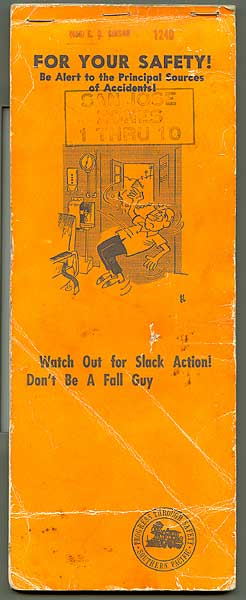
Southern Pacific 'SPINS' Books


Beyond being of historical interest, the pages of SP SPINS books serve as a dramatic example of how much local (and national) railroading differs from that of two decades ago. How did this come about? For my "spin" (HA!) on what took place, see below:
San Jose, 1972

San Francisco, 1966

The similtaneous effects of the 1980 recession and deregulation initiated a profound change in the nature of U.S. railroading. Before then, boxcar traffic prevailed, with industrial spurs snaking everywhere in urban areas. Afterward, the railroads largely evolved into container and bulk commodities carriers.

The massive loss of boxcar traffic came virtually overnight. Locally, a good example of how this came about is what was rumored to have happened with Owens-Corning (O-C) Fiberglass in Santa Clara (Zone 9). O-C was a major SP customer, with eleven dedicated spur tracks serving the manufacturing plant. I recall that it required two-to-three switches a day.

When the recession hit, SP correspondingly curtailed its industrial switching services, and stored boxcars filled-up every available track. SP's lately-embargoed San Ramon branch served as storage for hundreds of cars, for example.

One morning, O-C called the car clerk at Newhall,requesting a few extra cars for later in the day. Reportedly, the clerk routinely answered that SP absolutely could not come up with the proper type of cars in less than three days. This flew in the face of what the O-C plant personnel knew: just outside of their fence was a SP runaround track full of empty cars. In short order, O-C paved-over most of the tracks and switched most of their business,

This is what happened in a nutshell to railroads nationally. In the best of times under government price/service regulation, customers generally suffered from poor service. When the recession hit, the railroads reacted as they always had done in bad times, by cutting that already lackluster service, What railroad managers did not comprehend was that the equation had changed - deregulation put them into direct competition with trucks. The cutbacks in service forced the customers to take another look at alternatives, and SURPRISE, all of a sudden trucks were cheaper!


A bit of local trivia: To give you some idea on how rapidly the recession and deregulation knocked the wind out of SP, consider this. In the summer of 1980, I worked as a brakeman off of the San Francisco freight brakeman board (there was also a small passenger board, which was heavily augmented by men called off of the freight board). Often when I marked back to the board, I was more than "twenty-times-out", meaning twentieth in the rotation, but I nevertheless would be called back out again "on my rest" (upon expiration of Hours-of-Service required rest). By January, 1981, there were four men on the board, all with more than 15 years seniority, and I would not work regularly again in train service until 1984.